The Effectiveness of Gamification on Quizizz Online Platform to Enhance Students’ Achievement in English Language Learning
Keywords:
Gamification, Quizizz, Language LearningAbstract
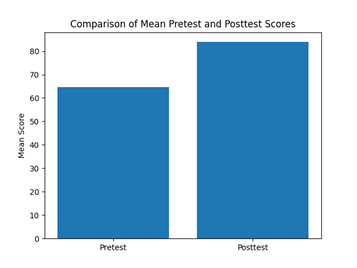
The purpose of this study is to evaluate the effectiveness of using the Quizizz platform for gamification in raising students' proficiency in English. The method used is a kuasi-eksperimen with pretest-posttest designs for 32 students in grade VIII B at SMPN 1 Bungkal. Data is collected using the pre-test and post-test results from Quizizz's survey. The paired sample t-test is then used for analysis. The study's findings indicate a significant increase in the students' rata-rata scores, which went from 64.53 on the pretest to 83.91 on the posttest. The statistical analysis shows that Quizizz is effective in increasing English language learning results, with Sig. (2-tailed) = 0.001 (< 0.05). The results of this study indicate that Quizizz-based learning is more effective than traditional methods. In other words, gamification like Quizizz can be an engaging and interactive alternative to traditional teaching media.References
Al-Dosakee, K., & Ozdamli, F. (2021). Gamification in Teaching and Learning Languages: A Systematic Literature Review. Revista Romaneasca Pentru Educatie Multidimensionala, 13(2), 559–577. https://doi.org/10.18662/rrem/13.2/436
Clement, A., & Murugavel, T. (2018). English for the Workplace: The Importance of English Language Skills for Effective Performance. 20(1), 1–15.
Dityaningsih, D., Astriyani, A., & Eminita, V. (2020). Pengaruh Game Edukasi Quizizz Terhadap Keaktifan dan Hasil Belajar Matematika Siswa. Prosiding Seminar Nasional Penelitian LPPM UMJ, 1–8. website: http://jurnal.umj.ac.id/index.php/semnaslit
Febrianto Hakeu, et al. (2023). Pemanfaatan Media Pembelajaran Berbasis Gamifikasi dalam Proses Pembelajaran di MIS Terpadu Al-Azhfar. Jurnal PGMI, 6. https://doi.org/10.58518/awwaliyah.v6i2.1930
Haji, S., Yumiati, Y., & Wijaya, T. T. (2025). Reconceptualizing authenticity in problem-based learning for linear algebra course: A multi-stakeholder analysis of video-based hybrid instruction. International Journal of Didactic Mathematics in Distance Education, 3(1), 44–63. https://doi.org/10.33830/ijdmde.v3i1.13479
Isnawati, A. U., & Hadi, S. (2022). Penerapan Gamifikasi untuk Meningkatkan Minat Belajar Siswa pada Mata Pelajaran Matematika Kelas II MI Ma’arif Cekok. Prosiding Adaptivia, 205–216.
Isnawan, M. G., Alsulami, N. M., Hidayat, R., & Kuswara, R. D. (2026). Hybrid didactic design research for fraction understanding during pandemic-induced remote learning: Addressing ontogenic, didactical, and epistemological obstacles. International Journal of Didactic Mathematics in Distance Education, 3(1), 83–105. https://doi.org/10.33830/ijdmde.v3i1.12898
Koster, R. (2004). A Theory of Fun for Game Design. New York: Paraglyph Press.
Likitrattanaporn, W. (2017). The Development of English Language Teaching Skills for Graduate Students through the Process of Learning by Doing. English Language Teaching, 10(7), 96. https://doi.org/10.5539/elt.v10n7p96
Monike, R. S., Sudirman, S., Kandaga, T., & Rodríguez-Nieto, C. A. (2025). Effectiveness of ChatGPT-integrated discovery learning on mathematical literacy in three-variable linear equation systems: A quasi-experimental study. International Journal of Didactic Mathematics in Distance Education, 3(1), 64–82. https://doi.org/10.33830/ijdmde.v3i1.13157
Nimasari, E. P., Harmanto, B., Bonavidi, R., Cobantoro, A. F., Elvina Dwi, C., & Velrinda Fahza’a, R. (2025). Engaging students in a collaborative and reflective reading material development: Participatory action research. JEES (Journal of English Educators Society), 10(2), 106–117. https://doi.org/10.21070/jees.v10i2.1948
Nurtanto, M., Kholifah, N., Ahdhianto, E., Samsudin, A., & Isnantyo, F. D. (2021). A Review of Gamification Impact on Student Behavioral and Learning Outcomes. International Journal of Interactive Mobile Technologies, 15(21), 22–36. https://doi.org/10.3991/ijim.v15i21.24381
Pranawengtias, W. (2022). Undergraduate Students’ Motivation on English Language Learning At Universitas Teknokrat Indonesia. Journal of English Language Teaching and Learning, 3(2), 27–32. https://doi.org/10.33365/jeltl.v3i2.1956
Pristiana. (2022). Implementasi Evaluasi Pembelajaran Model Gamification dalam Pelajaran Pendidikan Agama Islam pada Aspek Afektif Siswa di SMK Negeri 2 Bengkulu Utara. Script, 8.5.2017, 2003–2005.
Sudirman, Rodríguez-Nieto, C. A., Hidayat, R., Isnawan, M. G., Pauzan, M., Yumiati, Martadiputra, B. A. P., & Faizah, S. (2026). Operationalizing didactical situation-based online learning to support eighth-grade students’ mathematical reasoning and understanding in geometry: Participatory design research. Journal on Mathematics Education, 17(1), 43–68. https://doi.org/10.22342/jme.v17i1.pp43-68
Sudirman, S., Martadiputra, B. A. P., Faizah, S., Rodríguez-Nieto, C., Soeharto, S., Lavicza, Z., ... & Suprihatin, R. J. (2026). Integrating steam-based MOOC as a supplement to didactical and pedagogical practices in school mathematics: A design-based research. Journal of Technology and Science Education, 16(1), 125-146. https://doi.org/10.3926/jotse.3633
Sudirman, S., Andrés Rodríguez-Nieto, C., Dani Prasetyo Adi, P., Bukhori Muslim, A., Faizah, S., Dwi Susandi, A., & SaDijah, C. (2025). Contextualising AR digital module instruction as artifacts in 3D geometry: a didactical tetrahedron action research. International Journal of Mathematical Education in Science and Technology, 1-27.
Thariq, P. A., Husna, A., Aulia, E., Djusfi, A. R., Lestari, R., Fahrimal, Y., & Jhoanda, R. (2021). Sosialisasi Pentingnya Menguasai Bahasa Inggris Bagi Mahasiswa. Jurnal Pengabdian Masyarakat: Darma Bakti Teuku Umar, 2(2), 316. https://doi.org/10.35308/baktiku.v2i2.2835
Таумуратов, А. (2023). The use of technology in english language learning. Ренессанс В Парадигме Новаций Образования И Технологий В Xxi Веке, 1(1), 432–433. https://doi.org/10.47689/xxia-ttipr-vol1-iss1-pp432-433
Downloads
Published
How to Cite
Conference Proceedings Volume
Section
License
Copyright (c) 2026 Shinta Putria Dewitasari, Ana Maghfiroh, Bambang Harmanto

This work is licensed under a Creative Commons Attribution-ShareAlike 4.0 International License.