Integrating 21st-Century Skills into Foundational English Language Teaching: Insights from Teachers’ Practices
Keywords:
21st-century skills, 4C, Digital literacy, English language teaching, Qualitative study, Foundational learningAbstract
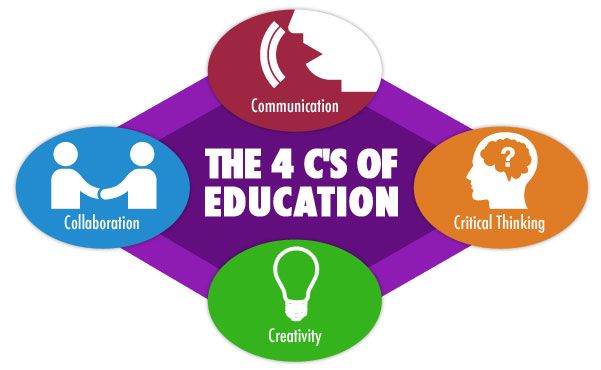
The integration of 21st-century skills, Critical Thinking, Creativity, Collaboration, and Communication (4C), alongside digital literacy is essential for equipping students for future educational activities. This study examines the integration of these abilities by foundational-level English teachers into their classroom activities. Data were gathered from four English teachers utilizing a qualitative case study design, employing semi-structured interviews and document analysis. The result indicated that teachers developed critical thinking through problem-based tasks and comparative analysis, stimulated creativity via project-based assignments, facilitated cooperation through structured group activities, and improved communication through presentations and peer evaluation. Digital literacy was introduced through the strategic application of online films, educational applications, and monitored internet inquiries. Teachers stated that the use of 4C skills enhanced students' motivation, confidence, and involvement. Nonetheless, they encountered obstacles like time limitations, diverse student skill levels, and limited access to digital resources. Teachers overcame these obstacles by modifying assignments, employing minimal resources, and gradually integrating 4C components into their instruction. The findings highlight the necessity of providing teachers with professional development and tools to optimize the integration of 21st-century skills in English language instruction.
References
Abdi, M. K. (2025). Zero-inflated poisson regression analysis of determinants of subject failures in the primary schools national examination of 2023 in Somaliland. 1–19
Al-Rashidi, A. H., Asif, M., Vanani, M. G., & Aberash, A. (2022). Learner-oriented assessment (LOA) practice: the comparative study of self-assessment, peer assessment, and teacher assessment on EFL learners’ writing complicity, accuracy, and fluency (CAF), speaking CAF, and attitude. Language Testing in Asia, 12(1). https://doi.org/10.1186/s40468-022-00209-x
Ambu-Saidi, B. (2024). Empowering Omani employees: Transforming communication skills through targeted English speaking courses. International Journal of Social Science and Education Research Studies, 4(7), 712–713. https://doi.org/10.55677/ijssers/V04I7Y2024-06
Aswirna, P., Roza, M., & Aldania, R. (2024). Application of LKPD based on guided inquiry model assisted by PhET simulation to learners’ critical thinking skills. Journal of Learning and Technology in Physics, 2(2), 46. https://doi.org/10.24114/jltp.v2i2.56676
Bal, M., Aydemir, A. G. K., & Coşkun, M. (2024). Exploring YouTube content creators’ perspectives on generative AI in language learning: Insights through opinion mining and sentiment analysis. PLoS ONE, 19(9 September), 1–30. https://doi.org/10.1371/journal.pone.0308096
Barton, G., Khosronejad, M., Ryan, M., Kervin, L., & Myhill, D. (2024). Teaching creative writing in primary schools: a systematic review of the literature through the lens of reflexivity. Australian Educational Researcher, 51(4), 1311–1330. https://doi.org/10.1007/s13384-023-00641-9
Bećirović, S., Dubravac, V., & Brdarević-Čeljo, A. (2022). Cooperative learning as a pathway to strengthening motivation and improving achievement in an EFL classroom. SAGE Open, 12(1), Article 21582440221078016. https://doi.org/10.1177/21582440221078016
Bimerew, M. (2024). Barriers and enablers of nurses’ adoption of digital health technology to facilitate healthcare delivery in resource-limited settings. Studies in Health Technology and Informatics, 315, 64–68. https://doi.org/10.3233/SHTI240107
Cao, W., & Yu, Z. (2023). Exploring learning outcomes, communication, anxiety, and motivation in learning communities: a systematic review. Humanities and Social Sciences Communications, 10(1), 1–13. https://doi.org/10.1057/s41599-023-02325-2
Chan, H. M. H., & Cho, V. W. S. (2022). An empirical study: The impact of collaborative communications on new product creativity that contributes to new product performance. Sustainability, 14(8). https://doi.org/10.3390/su14084626
Daflizar & Petraki, E. (2022). Readiness for autonomous English language learning: The case of Indonesian undergraduate students. Indonesian Journal of Applied Linguistics, 11(3), 515–526. https://doi.org/10.17509/ijal.v11i3.34259
David, D. (2023). Consensus on criteria for selection of sign language mobile apps: A Delphi study. Applied Data Science and Analysis, 2023, 59–65. https://doi.org/10.58496/adsa/2023/004
Fazilla, S., Yus, A., & Muthmainnah, M. (2022). Digital literacy and TPACK’s impact on preservice elementary teachers’ ability to develop science learning tools. Profesi Pendidikan Dasar, 9(1), 71–80. https://doi.org/10.23917/ppd.v9i1.17493
Fitriani, H., Samsuri, T., Rachmadiarti, F., Raharjo, R., & Mantlana, C. D. (2022). Development of evaluative-process learning tools integrated with conceptual-problem-based learning models: Study of its validity and effectiveness to train critical thinking. International Journal of Essential Competencies in Education, 1(1), 27–37. https://doi.org/10.36312/ijece.v1i1.736
Granger, K., & Gerlach, D. (2024). Critical feminist pedagogy in English language education: An action research project on the implementation of feminist views in a German secondary school. TESOL Quarterly, 58(2), 954–977. https://doi.org/10.1002/tesq.3272
Hamilton, K. A., & Qi, L. (2023). Search fluency mistaken for understanding: Ease of information retrieval from the internet inflates internal knowledge confidence. Social Media + Society, 9(3), Article 20563051231195547. https://doi.org/10.1177/20563051231195547
Hatmanto, E. D., & Sari, M. I. (2023). Aligning theory and practice: Leveraging ChatGPT for effective English language teaching and learning. E3S Web of Conferences, 440, 05001. https://doi.org/10.1051/e3sconf/202344005001
Herlina, & Wahira. (2024). Creating a sustainable entrepreneurship ecosystem through innovation in education. International Journal of Engineering, Science and Information Technology, 4(4), 225–229. https://doi.org/10.52088/ijesty.v4i4.647
Hutsalo, L., Skliar, I., Abrosimov, A., Kharchenko, N., & Ordanovska, O. (2024). Strategies for developing critical thinking and problem-based learning in the modern educational environment. Multidisciplinary Science Journal, 6. https://doi.org/10.31893/multiscience.2024ss0209
Instructor, A., & Ahmed, S. A. (2022). Investigating the challenges encountered by EFL teachers in practicing differentiated instruction in the multiple-intelligence classes at university. Unpublished manuscript.
Kexin, D., & Buang, N. A. (2024). Relationship between effectiveness of flipped classroom, blended learning, and task-oriented teaching methods on academic achievement among vocational college students in an OBE IT system environment. Journal of Digitainability, Realism & Mastery (DREAM), 3(4), 26–40. https://doi.org/10.56982/dream.v3i04.228
Kim, Y. (2023). Examining the impact of frontline service robots’ service competence on hotel frontline employees from a collaboration perspective. Sustainability, 15(9), Article 7563. https://doi.org/10.3390/su15097563
Krochinak, S., Cui, S., Ajayi, B., Egonu, R., & Kim, E. (2022). A mixed-methods study of secondary student and teacher attitudes towards mobile education apps in Lagos. Journal of Education, Society and Behavioural Science, 35(12), 72–83. https://doi.org/10.9734/jesbs/2022/v35i121196
Kurniawan, D. A., Darmaji, D., Astalini, A., & Muslimatul Husna, S. (2023). Study of critical thinking skills, science process skills, and digital literacy: Reviewed based on gender. Jurnal Penelitian Pendidikan IPA, 9(4), 1741–1752. https://doi.org/10.29303/jppipa.v9i4.1644
Lailatul Alifah, & Sukartono. (2023). Integration of 21st century skills in thematic learning in elementary school. Jurnal Ilmiah Sekolah Dasar, 7(1), 168–175. https://doi.org/10.23887/jisd.v7i1.55050
Laksmiwati, H., Rusijono, R., Mariono, A., & Arianto, F. (2022). The influence of collaborative learning on social skills in higher education. International Journal of Multidisciplinary Research and Analysis, 5(11), 2997–3000. https://doi.org/10.47191/ijmra/v5-i11-05
Li, Y., Chen, C. Y., Yu, D., Davidson, S., Hou, R., Yuan, X., Tan, Y., Pham, D., & Yu, Z. (2022). Using chatbots to teach languages. In Proceedings of the 9th ACM Conference on Learning @ Scale (L@S 2022) (pp. 451–455). https://doi.org/10.1145/3491140.3528329
Lyons, P. G., Gause, S. A., Eakin, M. N., O’Brien, B. C., & Santhosh, L. (2024). Seven practical recommendations for designing and conducting qualitative research in medical education. ATS Scholar, 5(2), 231–241. https://doi.org/10.34197/ats-scholar.2023-0144PS
Mendo-Lázaro, S., León-del-Barco, B., Polo-del-Río, M. I., & López-Ramos, V. M. (2022). The impact of cooperative learning on university students’ academic goals. Frontiers in Psychology, 12, Article 787210. https://doi.org/10.3389/fpsyg.2021.787210
Munajah, R., Sumantri, M. S., & Yufiarti, Y. (2022). The use of digital storytelling to improve students’ writing skills. Advances in Mobile Learning Educational Research, 3(1), 579–585. https://doi.org/10.25082/amler.2023.01.006
Musfira, A. F., Ibrahim, N., & Harun, H. (2022). A thematic review on digital storytelling (DST) in social media. Qualitative Report, 27(8), 1590–1620. https://doi.org/10.46743/2160-3715/2022.5383
Oruç, E. (2024). Student voice in higher education: A negotiated curriculum in the foreign language classroom. European Journal of Education, 59(2), 1–15. https://doi.org/10.1111/ejed.12627
Osias Kit T. Kilag, Heyrosa-Malbas, M., Arcillo, M. T., & Barcena, M. C. (2023). The role of YouTube children’s educational videos in enhancing early childhood English language proficiency: An investigation of parental perceptions. International Journal of Scientific Multidisciplinary Research, 1(7), 833–846. https://doi.org/10.55927/ijsmr.v1i7.3545
Rahmawati Zaimah, N., Fatchiatuzahro, & Hartanto, E. B. (2024). Enhancing writing comprehension in L2 Arabic learners through AI-based translanguaging chatbots. Al-Mubin: Islamic Scientific Journal, 7(1), 21–34. https://doi.org/10.51192/almubin.v7i1.753
Ricoy, M. C., & Sánchez-Martínez, C. (2022). Raising ecological awareness and digital literacy in primary school children through gamification. International Journal of Environmental Research and Public Health, 19(3), Article 1149. https://doi.org/10.3390/ijerph19031149
Sein, K. (2022). Culture learning in Myanmar EFL context. Journal of Green Learning, 2(1), 1–9. https://doi.org/10.53889/jgl.v2i1.101
Soomro, E. P., & Arain, M. A. (2023). Impactful cooperative learning and academic achievement of mathematics students. Academy of Education and Social Sciences Review, 3(2), 103–110. https://doi.org/10.48112/aessr.v3i2.465
Tavakoli, P., Kendon, G., Mazhurnaya, S., & Ziomek, A. (2023). Assessment of fluency in the test of English for educational purposes. Language Testing, 40(3), 607–629. https://doi.org/10.1177/02655322231151384
Tineh, S., Rorintulus, O. A., & Wuntu, C. N. (2023). Integrated skills in English language learning: Examining folklore-implemented teaching toward EFL students’ English skills. Edumaspul: Jurnal Pendidikan, 7(2), 3982–3994. https://doi.org/10.33487/edumaspul.v7i2.7054
Trullàs, J. C., Blay, C., Sarri, E., & Pujol, R. (2022). Effectiveness of problem-based learning methodology in undergraduate medical education: a scoping review. BMC Medical Education, 22(1), 1–12. https://doi.org/10.1186/s12909-022-03154-8
Xu, Y., Harrison, T. M., Chan, A. C. Y., Lewis, A. A., Levkoff, S. E., & Kunz, G. M. (2023). Custodial grandchildren’s school attendance and academic performance during COVID-19: The role of technology. Societies, 13(10), Article 215. https://doi.org/10.3390/soc1310021
Yang, L. (2024). Enhancing emotional health and engagement in Chinese English language learners: An approach from teachers’ autonomy-supportive behavior, teachers’ harmony, and peer support in a two-sample study. Frontiers in Psychology, 15, Article 1356213. https://doi.org/10.3389/fpsyg.2024.1356213
Yu, L., Gu, M., & Chan, K. L. (2023). Hong Kong adolescents’ participation in political activities: Correlates of violent political participation. Applied Research in Quality of Life, 18(3), 1–15. https://doi.org/10.1007/s11482-023-10143-6
Zenku, I., & Dimovska, M. K. (2023). Communication and creativity of managers in the context of effective management in organizations in the Republic of North Macedonia. European Journal of Economics, Law and Social Sciences, 7(3), 35–43. https://doi.org/10.2478/ejels-2023-0014
Zhang, H., Shi, S., Zhao, F., Ye, X., & Qi, H. (2023). A study on the impact of team interdependence on cooperative performance in public–private partnership projects: The moderating effect of government equity participation. Sustainability, 15(17), Article 12684. https://doi.org/10.3390/su151712684
Downloads
Published
How to Cite
Conference Proceedings Volume
Section
License
Copyright (c) 2025 Juhana, Sylvia, Maya Puspitasari

This work is licensed under a Creative Commons Attribution-ShareAlike 4.0 International License.