From Scroll to Skill: A Multidisciplinary Exploration of English Language Learning through Social Media Content
Keywords:
Social Media, English Learning, Second Language Acquisition, Learner Preferences, Multidisciplinary StudyAbstract
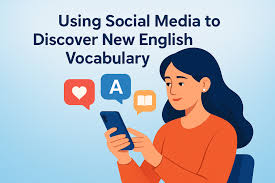
The emergence of social media platforms is transforming how EFL (English as a Foreign Language) learners engage directly with real content, creating new opportunities for second language acquisition beyond the classroom. TikTok and similar platforms have emerged as major venues for socially engaged, entertaining-educative short content that directly links language with technology and communication. The current research explored how students from different backgrounds use social media for English learning and which types of content they find most influential. A descriptive design based on surveys was employed to gather data through questionnaires handed out to a variety of participants in the research context, including students, staff, and other community individuals. The findings indicate that learners interact with English material on social media sites, exhibiting variations in usage and preferences according to the professional affiliations of the learner participants. Learners preferred entertaining-educational videos, interactive language advice, and culturally focused content the most. This research confirms the significance of social media as a multifaceted learning environment since it integrates education, communication, and digital skills. This study contributes to scholarship by offering insights for educators, content creators, and policymakers to create more effective, readily available, and contextually appropriate resources for learning English.References
AlAfnan, M. (2024). Cultural and Behavioral Insights into European Social Media Users: Platform Preferences and Personality Types. Studies in Media and Communication. https://doi.org/https://doi.org/10.11114/smc.v13i1.7306
Amaliyah, A., Agusmiati, S., Zakiyah, B., Ummah, W., Hasanah, U., Baini, & Abdullah, D. (2021). Accelerated e-Learning Implementation through Youtube Videos Using Smartphones. Journal of Physics: Conference Series, 1899. https://doi.org/https://doi.org/10.1088/1742-6596/1899/1/012155
Araujo, M. (2024). The Social Media Platforms and ICT Tools Used by Indonesian EFL Undergraduate Students to Improve Their English. Magister Scientiae. https://doi.org/https://doi.org/10.33508/msg.v52i1.5331
Bandura, A. (1971). Social learning theory. General Learning Press.
Braun, V., & Clarke, V. (2006). Using thematic analysis in psychology. Qualitative Research in Psychology, 3(2), 77–101. https://doi.org/https://doi.org/10.1191/1478088706qp063oa
Calafato, R., & Clausen, T. (2024). Vocabulary learning strategies in extramural English gaming and their relationship with vocabulary knowledge. Computer Assisted Language Learning. https://doi.org/https://doi.org/10.1080/09588221.2024.2328023
Creswell, J. W. (2018). Research design: Qualitative, quantitative, and mixed methods approaches (5th editio). SAGE Publications Ltd.
Derwing, T. M., & Munro, M. J. (2015). Pronunciation Fundamentals: Evidence-based Perspectives for L2 Teaching and Research. John Benjamins Publishing Company. https://doi.org/10.1075/lllt.42
Garcia, O., & Wei, L. (2014). Translanguaging: Language, Bilingualism, and Education. Palgrave MacMillan.
Habibi, A., Mailizar, M., Yaqin, L., Alqahtani, T., Abrar, M., Hamuddin, B., & Failasofah, F. (2024). Unlocking English proficiency: Youtube’s impact on speaking skills among indonesian university students. Journal of Technology and Science Education. https://doi.org/https://doi.org/10.3926/jotse.2485
Harishma, H. (2024). Navigating Intercultural Competence and Language Development in the Social Media Age. Shanlax International Journal of English. https://doi.org/https://doi.org/10.34293/english.v13is1-dec.8571
Iswahyuni, D. (2021). EMBRACING SOCIAL MEDIA TO IMPROVE EFL LEARNERS’ ENGLISH SKILL. PROJECT (Professional Journal of English Education). https://doi.org/https://doi.org/10.22460/PROJECT.V4I4.P704-711
Jin, S. (2023). Unleashing the Potential of Social Media: Enhancing Intercultural Communication Skills in the Hospitality and Tourism Context. Sustainability. https://doi.org/https://doi.org/10.3390/su151410840
Juliana, D., Tambunan, A., & Pane, I. (2024). The Use of YouTube and TikTok in Improving the Students’ Vocabulary Achievement. Journal of English for Academic and Specific Purposes (JEASP). https://doi.org/https://doi.org/10.18860/jeasp.v7i2.29036
Krashen, S. D. (1982). Principles and Practice in Second Language Acquisition. In Pergamon Press Inc. Pergamon Press Inc.
Kress, G. (2010). Multimodality: A social semiotic approach to contemporary communication. Routledge.
Mahmud, M., Ammade, S., Halim, A., & Amin, F. (2022). Students’ Voices of the Use of Facebook and Instagram in Teaching English in the University Context. International Journal of Language Education. https://doi.org/https://doi.org/10.26858/ijole.v6i2.24757
Malik, A., & Qureshi, F. (2024). Exploring the Impact of Social Media on English Language Learning: Opportunities and Challenges. Research Studies in English Language Teaching and Learning. https://doi.org/https://doi.org/10.62583/rseltl.v2i3.50
Mayer, R. E. (2009). Multimedia Learning. Cambridge University Press. https://doi.org/https://doi.org/10.1017/CBO9780511811678
Ng, W. (2012). Can we teach digital natives digital literacy? Computers & Education, 59(3), 1065–1078. https://doi.org/https://doi.org/10.1016/j.compedu.2012.04.016
Prensky, M. (2001). Digital natives, digital immigrants. On the Horizon, 9(5), 1–6. https://doi.org/https://doi.org/10.1108/10748120110424816
Raj, N., & Renumol, V. (2021). A systematic literature review on adaptive content recommenders in personalized learning environments from 2015 to 2020. Journal of Computers in Education, 9, 113–148. https://doi.org/https://doi.org/10.1007/s40692-021-00199-4
Ryan, R. M., & Deci, E. L. (2000). Self-Determination Theory and the Facilitation of Intrinsic Motivation, Social Development, and Well-Being. American Psychologist, 55(1), 68–78. https://doi.org/10.1037//0003-066X.55.1.68
Schmitt, N. (2010). Researching Vocabulary: A Vocabulary Research Manual. Palgrave Macmillan London. https://doi.org/https://doi.org/10.1057/9780230293977
Trang, N. (2023). The Role of Social Media in Academic Motivation and Engagement: A Case Study of Undergraduate Students in Vitenam. INTERNATIONAL JOURNAL OF SOCIAL SCIENCE AND EDUCATION RESEARCH STUDIES. https://doi.org/https://doi.org/10.55677/ijssers/v03i7y2023-32
Vygotsky, L. S. (1978). Mind in Society: The Development of Higher Psychological Processes. Harvard University Press.
Wilson, A., & Anam, S. (2024). Exploring the Impact of Social Media Use on English Vocabulary Learning among Non-English Major University Students. Scope : Journal of English Language Teaching. https://doi.org/https://doi.org/10.30998/scope.v9i1.22463
Zhai, X., & Razali, A. (2021). An Overview of the Utilization of TikTok to Improve Oral English Communication Competence among EFL Undergraduate Students. Universal Journal of Educational Research. https://doi.org/https://doi.org/10.13189/ujer.2021.090710
Downloads
Published
How to Cite
Conference Proceedings Volume
Section
License
Copyright (c) 2025 Elan Zaky Susanto, Tri Pujiani, Muhammad Soali

This work is licensed under a Creative Commons Attribution-ShareAlike 4.0 International License.